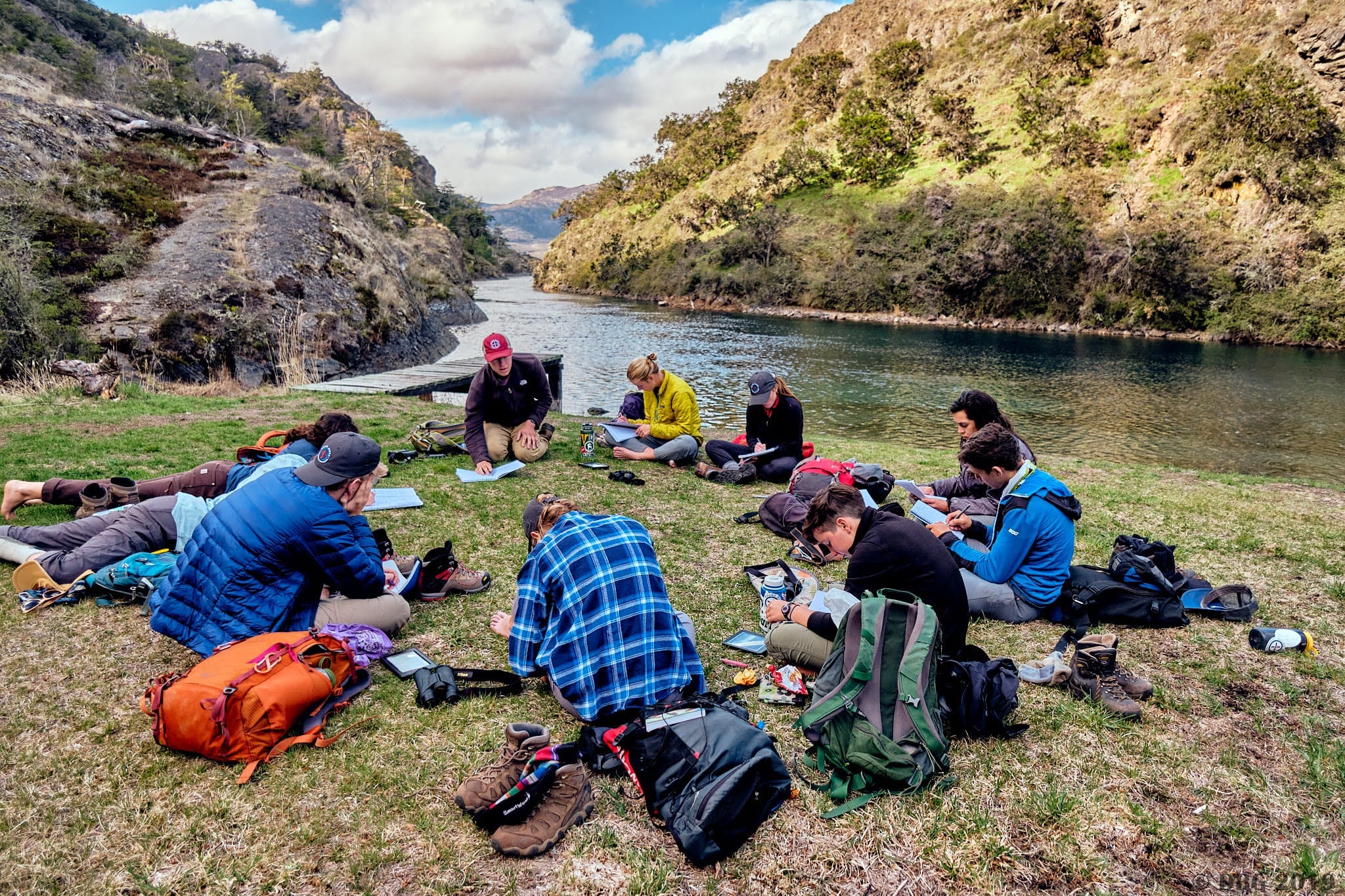
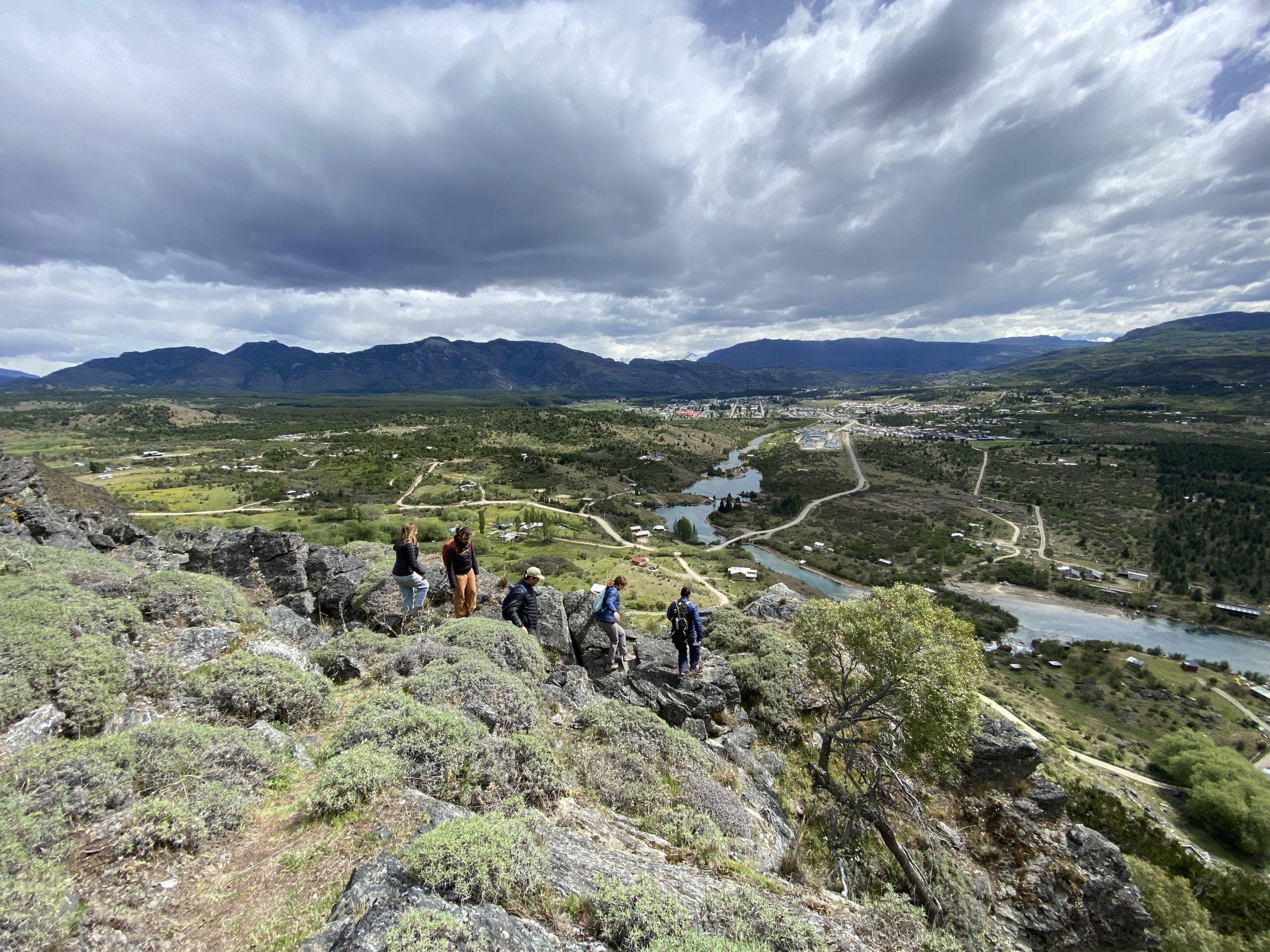
In 2012, Round River Conservation Studies became involved in the transition and restoration of private lands that would eventually form Patagonia National Park, actively engaging in efforts to protect and restore biodiversity in Chilean Patagonia. Through our work, we grew and fostered relationships with Chile’s national parks and forest service agency (CONAF) and local municipal governments, expanding our focus to include endangered species and ecological monitoring across the Aysen region. These collaborations allowed us to implement effective landscape-scale conservation strategies while engaging closely with communities, and as our work progressed, we deepened connections by collaborating with NGOs and schools to support conservation efforts and environmental education.
Our initiatives have evolved alongside the changing landscape, adjusting to shifts in local land use while staying committed to preserving the rich history and biodiversity of this region. With research on key taxa, including the endangered huemul deer (Hippocamelus bisulcus), guanaco (Lama guanicoe), and ñandú or lesser rhea (Pennata pennata), we actively contribute to understanding and protecting Patagonia’s unique ecosystems. Our findings have informed management decisions that support effective conservation efforts, and through continued biodiversity monitoring and integration of traditional ecological knowledge, we remain focused on preserving Patagonia’s ecological health and resilience.
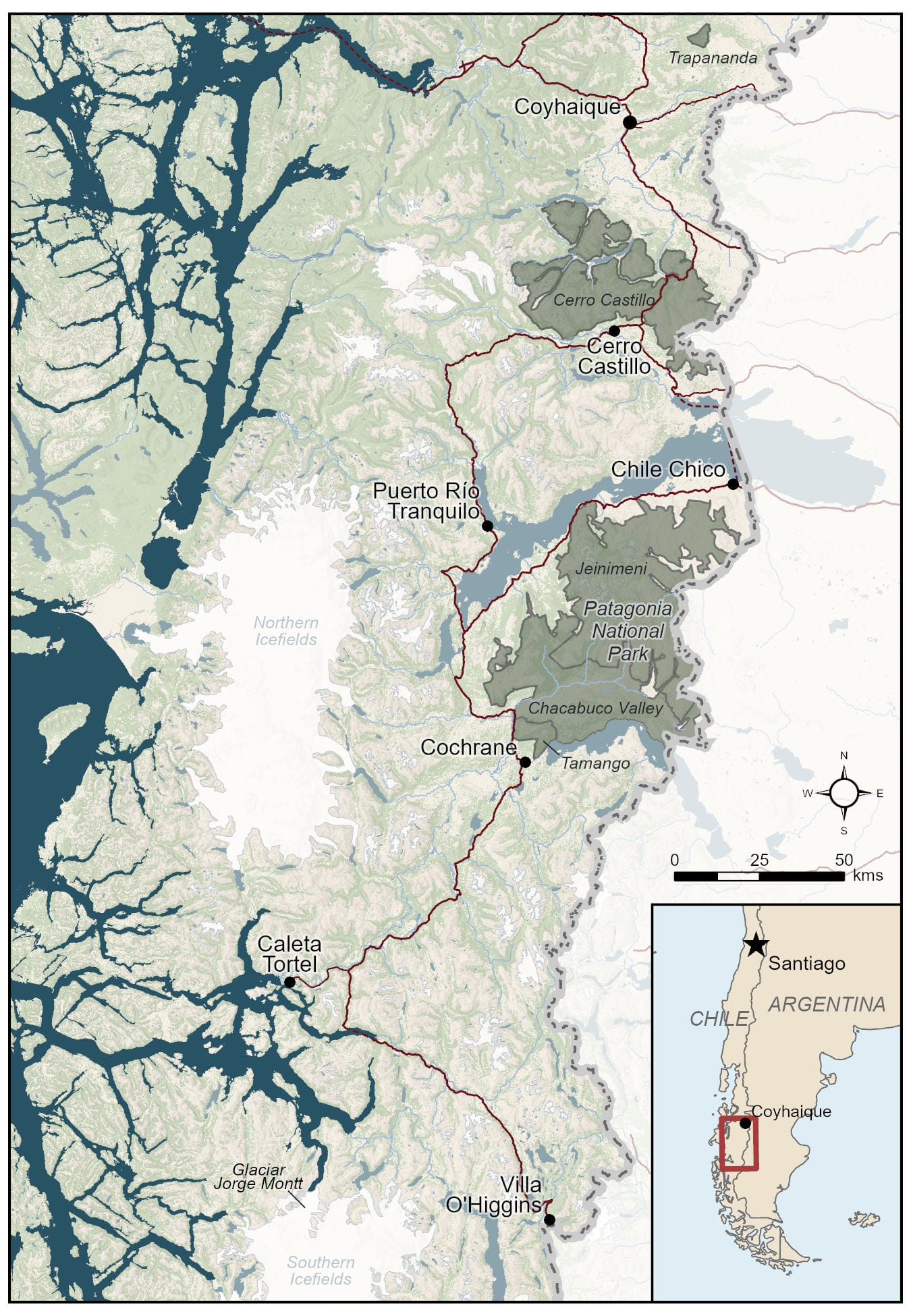

Our scientific efforts are integral to informing management decisions and safeguarding critical habitats. We conduct flora and fauna monitoring through on-the-ground surveys, camera trapping, and population modeling, providing essential data that supports the protection of endangered species and ecological integrity. These research initiatives ensure that conservation strategies are both evidence-based and responsive to the needs of this dynamic landscape.

Our work is rooted in collaboration with key stakeholders, including CONAF, local municipalities, NGOs, and private landowners. We advance their conservation goals by providing tailored support and expertise, ensuring that their needs and interests are met. Additionally, we engage with local schools to foster environmental education, empowering the next generation to become stewards of this remarkable region.

In 2012, Round River Conservation Studies became involved in the transition and restoration of private lands that would eventually form Patagonia National Park, actively engaging in efforts to protect and restore biodiversity in Chilean Patagonia. Through our work, we grew and fostered relationships with Chile’s national parks and forest service agency (CONAF) and local municipal governments, expanding our focus to include endangered species and ecological monitoring across the Aysen region. These collaborations allowed us to implement effective landscape-scale conservation strategies while engaging closely with communities, and as our work progressed, we deepened connections by collaborating with NGOs and schools to support conservation efforts and environmental education.
Our initiatives have evolved alongside the changing landscape, adjusting to shifts in local land use while staying committed to preserving the rich history and biodiversity of this region. With research on key taxa, including the endangered huemul deer (Hippocamelus bisulcus), guanaco (Lama guanicoe), and ñandú or lesser rhea (Pennata pennata), we actively contribute to understanding and protecting Patagonia’s unique ecosystems. Our findings have informed management decisions that support effective conservation efforts, and through continued biodiversity monitoring and integration of traditional ecological knowledge, we remain focused on preserving Patagonia’s ecological health and resilience.

Our scientific efforts are integral to informing management decisions and safeguarding critical habitats. We conduct flora and fauna monitoring through on-the-ground surveys, camera trapping, and population modeling, providing essential data that supports the protection of endangered species and ecological integrity. These research initiatives ensure that conservation strategies are both evidence-based and responsive to the needs of this dynamic landscape.

Our work is rooted in collaboration with key stakeholders, including CONAF, local municipalities, NGOs, and private landowners. We advance their conservation goals by providing tailored support and expertise, ensuring that their needs and interests are met. Additionally, we engage with local schools to foster environmental education, empowering the next generation to become stewards of this remarkable region.
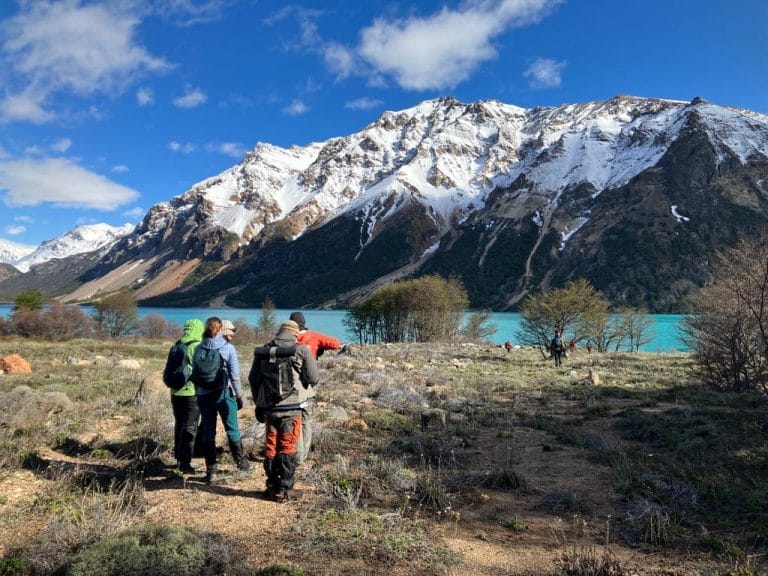
Our Huemul conservation work is centered on collecting critical data on species distribution and population dynamics to support the development of new management plans. This involves monitoring the largest known huemul population, surveying their presence in protected areas, and studying factors that affect their wellbeing, such as interactions with domestic animals, and climate change-related diseases. Our research plays a key role in informing conservation strategies to protect this vulnerable species.
Our guanaco monitoring project, initiated in 2015 in Patagonia National Park, tracks the population shifts as the area transitioned from private ranchland to a protected area. In collaboration with CONAF and with the support of Rewilding Chile, we conduct distance sampling surveys to model and monitor guanaco populations, ensuring their protection and understanding their role in the park's ecosystem.
Our ñandú monitoring project, launched in 2015 in collaboration with Rewilding Chile, focuses on tracking population size, movement, and distribution of these native birds within Patagonia National Park. The data we collect plays a crucial role in supporting Rewilding Chile's reintroduction efforts, helping to ensure the successful restoration of ñandú populations in the region.
We have partnered with local schools to create immersive learning experiences for the youth of Cochrane, Villa O’Higgins, Caleta Tortel, and Puerto Edén.

Our 12-week semester programs in Chilean Patagonia center on conservation monitoring and first-hand experience with the landscape. This program has been active since 2012, and has evolved throughout that time to fit the research needs of our partners. Highlights of the semester include homestays with local campesino families and multi-day backpacking trips in Patagonia National Park and Cerro Castillo National Reserve.
Our 12-week semester programs in Chilean Patagonia center on conservation monitoring and first-hand experience with the landscape. This program has been active since 2012, and has evolved throughout that time to fit the research needs of our partners. Highlights of the semester include homestays with local campesino families and multi-day backpacking trips in Patagonia National Park and Cerro Castillo National Reserve.
Maggie Triska
Conservation Director
Email: maggie@roundriver.org
Ben Szydlowski
Student Programs Director
Email: benszyd@roundriver.org
Gabe Kayano
Student Programs Associate Director
Email: gabriel@roundriver.org
We use cookies to improve your experience on our site. By using our site, you consent to cookies.
Websites store cookies to enhance functionality and personalise your experience. You can manage your preferences, but blocking some cookies may impact site performance and services.
Essential cookies enable basic functions and are necessary for the proper function of the website.
These cookies are needed for adding comments on this website.
Google reCAPTCHA helps protect websites from spam and abuse by verifying user interactions through challenges.
Statistics cookies collect information anonymously. This information helps us understand how visitors use our website.
Google Analytics is a powerful tool that tracks and analyzes website traffic for informed marketing decisions.
Service URL: policies.google.com (opens in a new window)